
The Championships, Wimbledon, commonly known simply as Wimbledon, is the oldest tennis tournament in the world
It has been held at the All England Club in Wimbledon, London, since 1877 and is played on outdoor grass courts
Wimbledon is one of the four Grand Slam tennis tournaments, the others being the Australian Open, the French Open and the US Open. Since the Australian Open shifted to hardcourt in 1988, Wimbledon is the only major still played on grass
Strawberries and cream are traditionally consumed at the tournament
Our new ETON MESS slab bars are now on sale at Bradley’s Butchers & Delicatessen
Fans consume on average 34,000 kg of English strawberries and 10,000 litres of cream

The tournament is also notable for the absence of sponsor advertising around the courts, except the advertisements of Rolex
In 2009, Wimbledon’s Centre Court was fitted with a retractable roof to lessen the loss of playing time due to rain
Since 2002, the courts used for Wimbledon have been sown with 100% perennial ryegrass. Prior to 2002 a combination of 70% ryegrass and 30% Creeping Red Fescue was used. The change was made to improve durability and strengthen the sward to better withstand the increasing wear of the modern game
The main show courts, Centre Court and No. 1 Court, are normally used for only two weeks a year, during the Championships
The remaining 17 courts are regularly used for other events hosted by the Club
The principal court, Centre Court, was opened in 1922 when the Club moved from Worple Road to Church Road. The Church Road venue was larger and was needed to meet the ever-growing public demand
Because of the summer climate in southern England, Wimbledon employs ‘Court Attendants’ each year, who work to maintain court conditions. Their principal responsibility is to ensure that the courts are quickly covered when it begins to rain, so that play can resume as quickly as possible once the referees decide to uncover the courts. The court attendants are mainly university students working to make summer money
Social commentator Ellis Cashmore describes Wimbledon as having “a David Niven-ish propriety”, conforming to the standards of behaviour common in the 1950s
Writer Peter York sees the event as representing a particular white and affluent type of Britishness, describing the area of Wimbledon as “a southern, well off, late-Victorian suburb with a particular social character”
Cashmore has criticised the event for being “remote and insulated” from the changing multicultural character of modern Britain, describing it as “nobody’s idea of all-things-British”
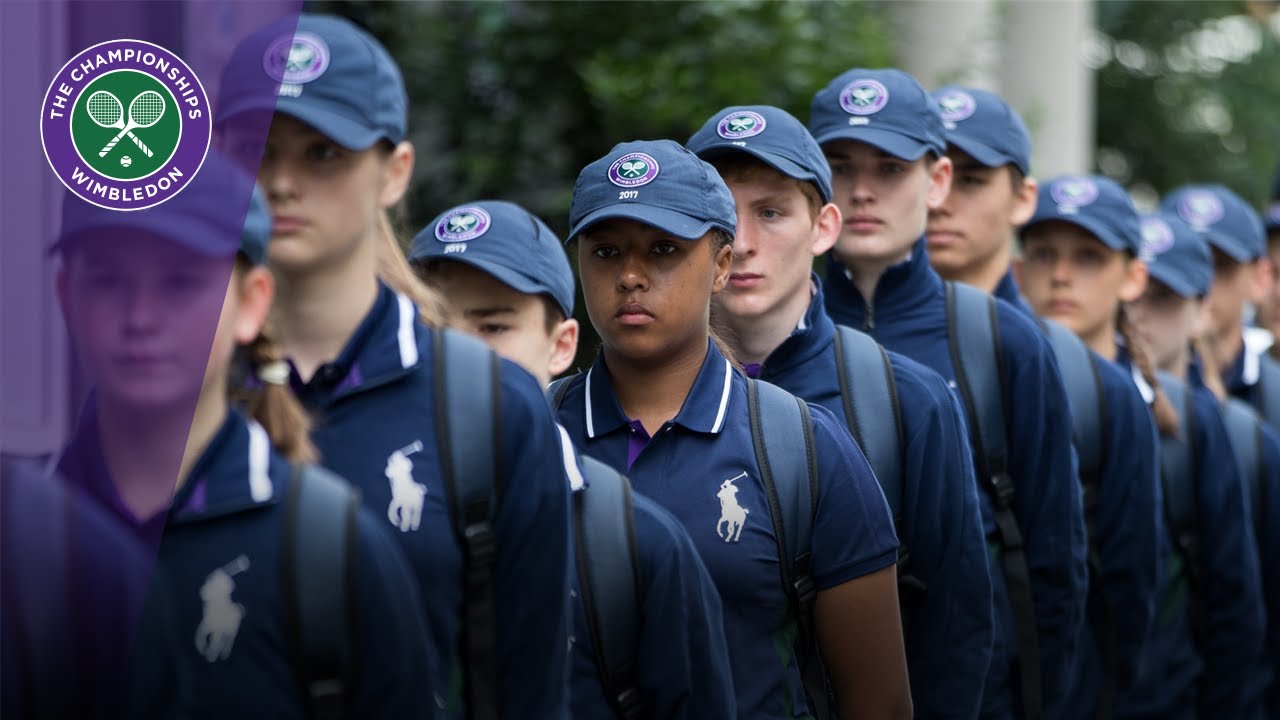
In the championship games, ball boys and girls, known as BBGs, play a crucial role in the smooth running of the tournament, with a brief that a good BBG “should not be seen. They should blend into the background and get on with their jobs quietly.”
From 1947 ball boys were supplied by Goldings – the only Barnardos school to provide them. Prior to this, from the 1920s onwards, the ball boys had been provided by The Shaftesbury Children’s Home.
Since 1969, BBGs have been provided by local schools. As of 2008 they are drawn from schools in the London boroughs of Merton, Sutton, Kingston, and Wandsworth, as well as from Surrey
Traditionally, Wandsworth Boys School in Sutherland Grove, Southfields and Mayfield Girls School on West Hill in Wandsworth, both now defunct, were the schools of choice for selection of BBGs
BBGs have an average age of 15, being drawn from the school years nine and ten. BBGs will serve for one, or if re-selected, up to five tournaments, from Year Nine to Year Thirteen
Starting in 2005, BBGs work in teams of six, two at the net, four at the corners, and teams rotate one hour on court, one hour off, (two hours depending on the court) for the day’s play
The number of BBGs required is around 250
Each BBG receives a certificate, a can of used balls, a group photograph and a programme when leaving
BBG service is paid, with a total of £120-£180 being paid to each ball boy or girl after the 13-day period depending on the number of days served
Every BBG keeps all of their kit, typically consisting of three or four shirts, two or three shorts or skirts, track suit bottoms and top, twelve pairs of socks, three pairs of wristbands, a hat, water bottle holder, bag and trainers
Along with this it is seen as a privilege, and seen as a valuable addition to a school leaver’s curriculum vitae, showing discipline
BBG places are split 50:50 between boys and girls, with girls having been used since 1977, appearing on centre court since 1985
Prospective BBGs are first nominated by their school headteacher, to be considered for selection
To be selected, a candidate must pass written tests on the rules of tennis, and pass fitness, mobility and other suitability tests, against initial preliminary instruction material
Successful candidates then commence a training phase, starting in February, in which the final BBGs are chosen through continual assessment
Dark green and purple are the traditional Wimbledon colours
All players participating in the tournament are required to wear all-white or at least almost all-white clothing, a long-time tradition at Wimbledon
Wimbledon is notable for the longest running sponsorship in sports history due to its association with Slazenger who have supplied all tennis balls during the tournament since 1902
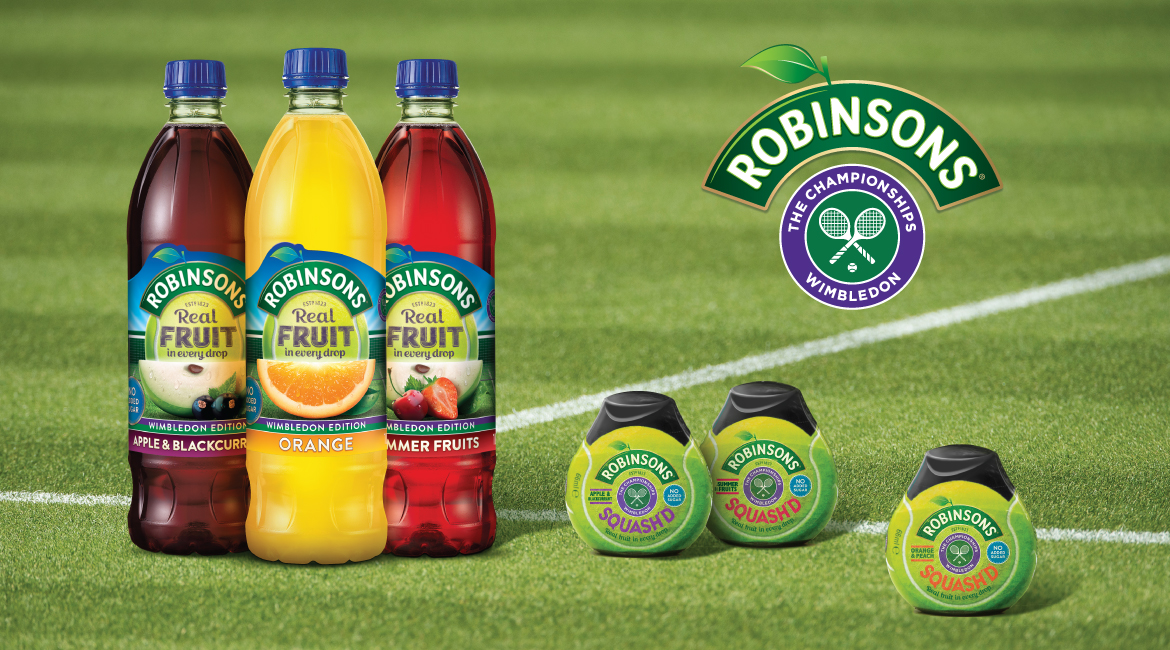
Since 1935 Wimbledon has a sponsorship association with the Robinsons fruit drink brand
 Lefevre Chocolate